
BRL and University teams demonstrate the largest area uniformity IBD optical coatings with sub-ppm optical losses, high cw-LIDT and ns-LIDT
-
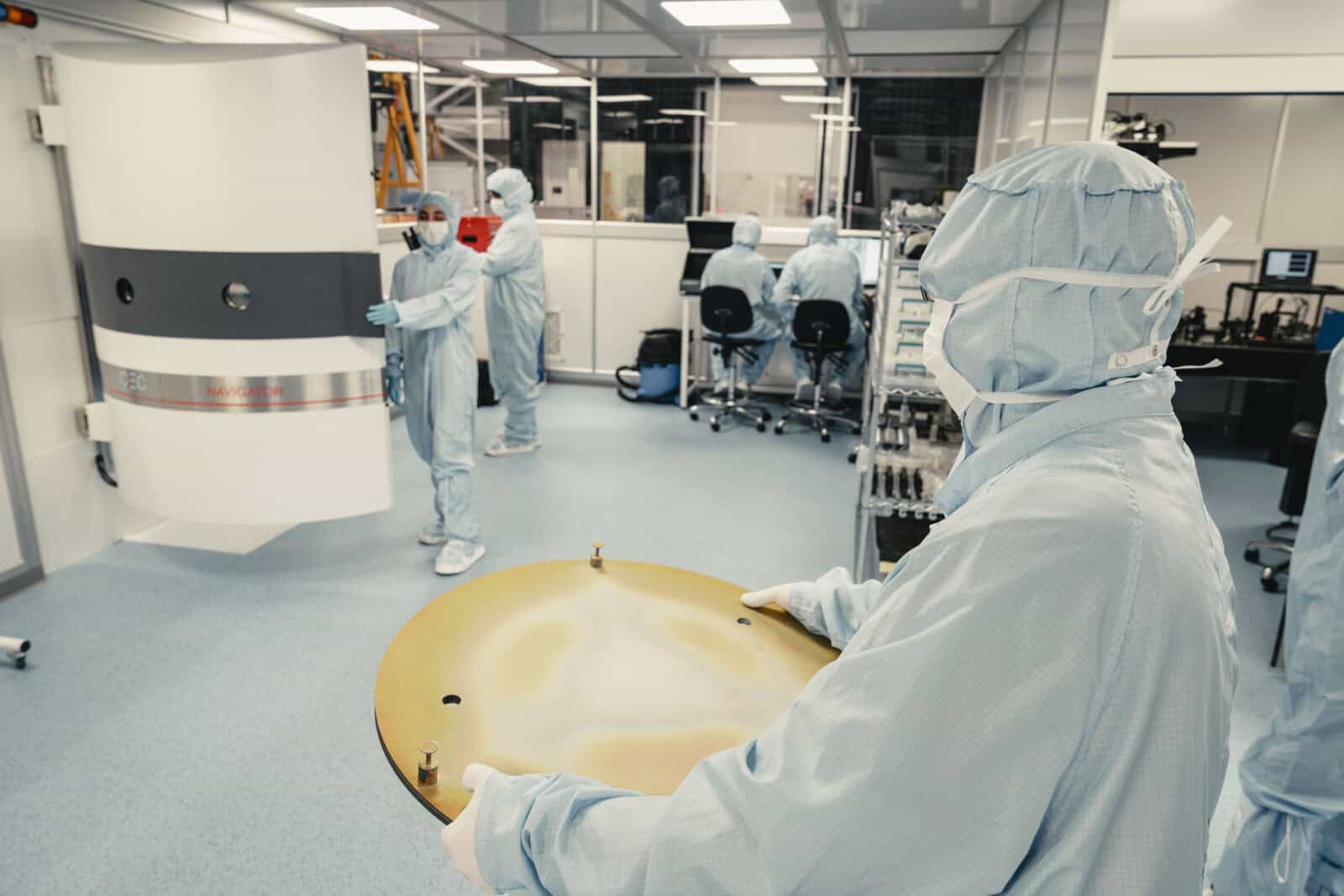
EPOC/University of Strathclyde manufacturing facility for IBD coatings -

Uniformity for silica and tantalum pentoxide single layers for left and right hand side positions -
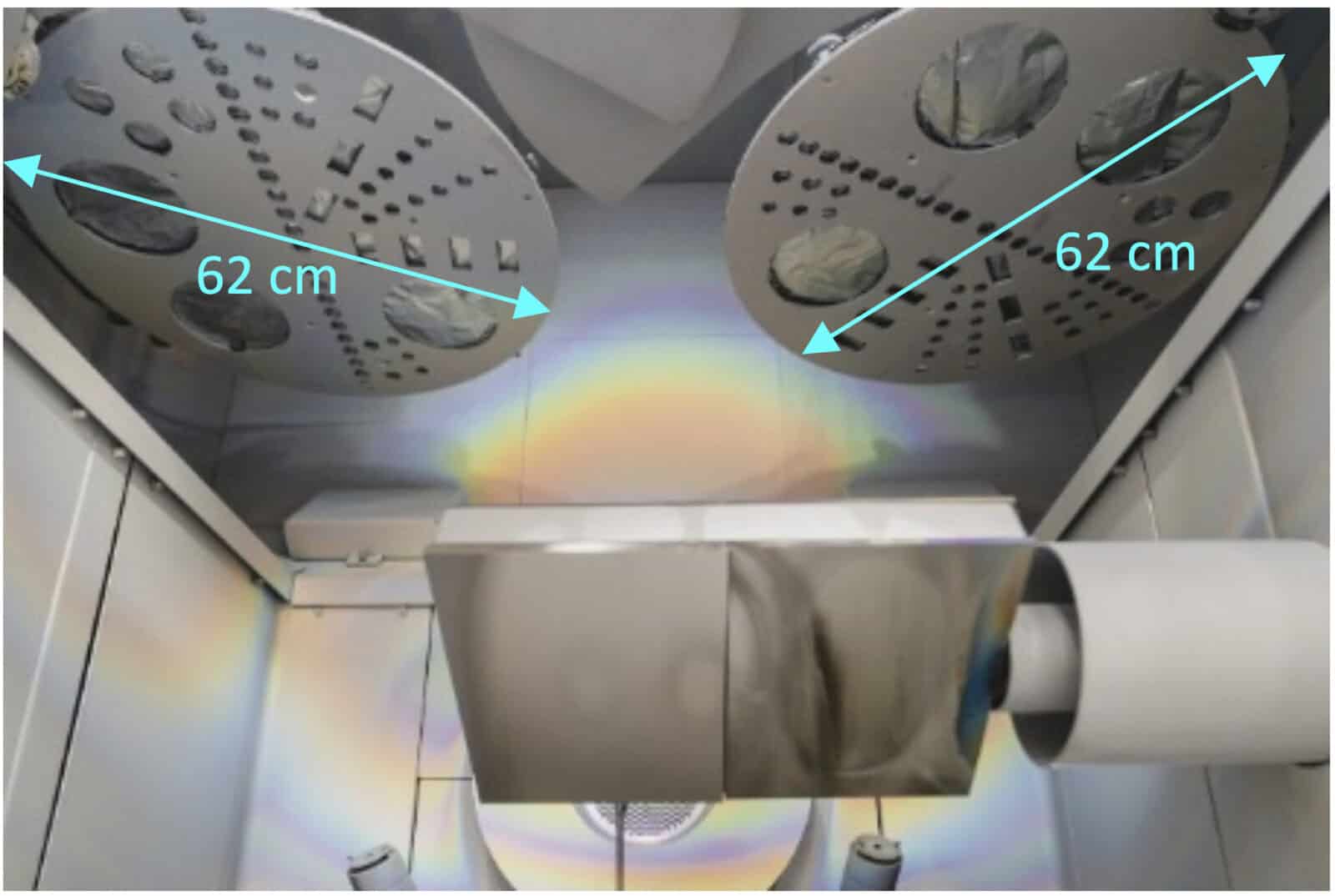
Inside geometry of IBD deposition chamber -
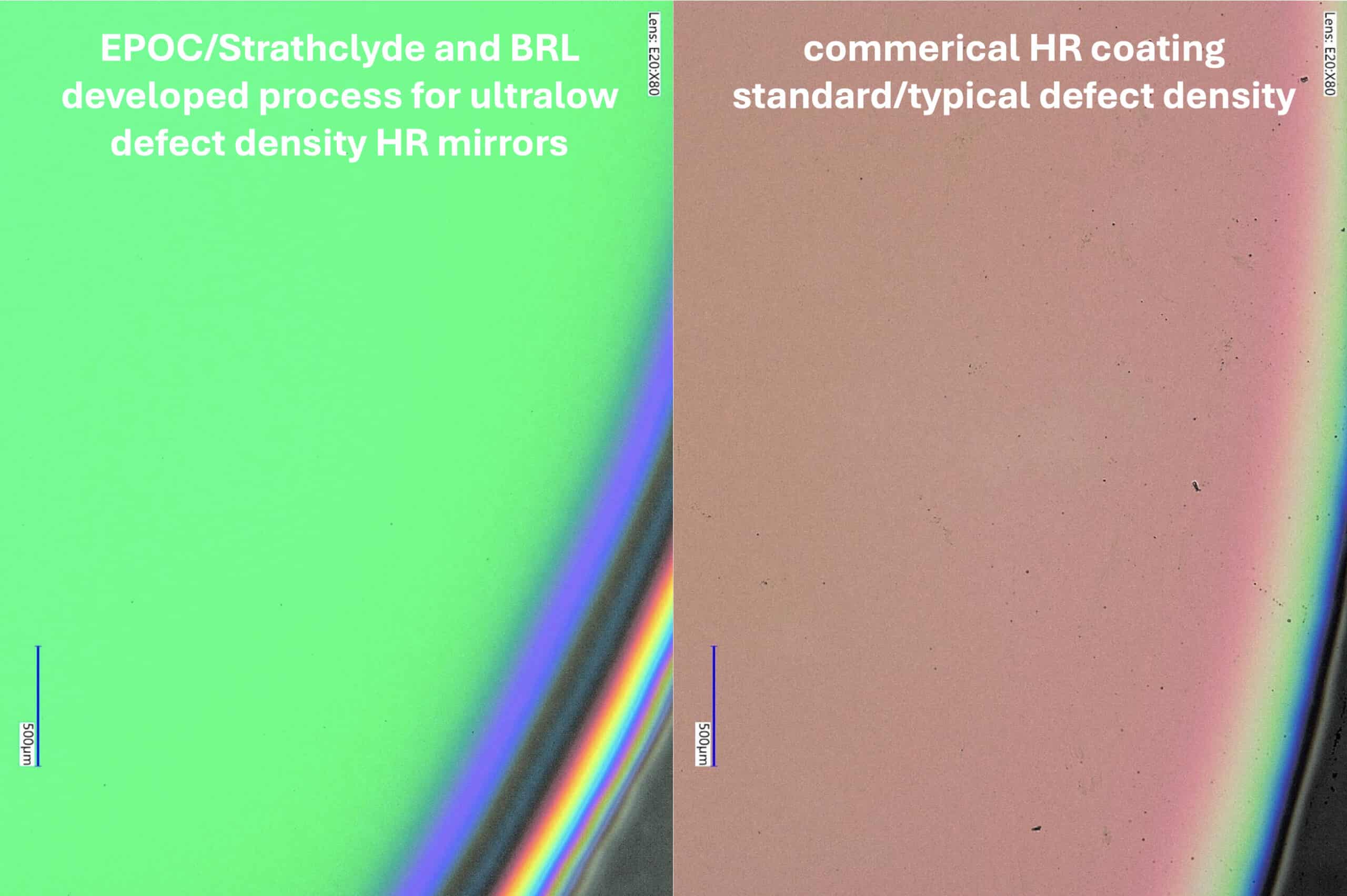
Unique processes developed to reduce defect density for enhanced LIDT performance
Achieving high laser-induced damage thresholds (LIDT) on small optics is one thing. Maintaining that performance uniformly across large apertures is quite another.
In this work, ion-beam deposited coatings produced a nanosecond LIDT of 4582 MW/cm² at 1064 nm, placing them among the highest reported values for coatings at this wavelength. Crucially, this was achieved alongside a coating thickness uniformity of better than 1% over a 620 mm aperture and an optical absorption of just 0.4 ppm at 1064 nm.
Commerical and industrial significance:
An LIDT exceeding 4.5 GW/cm² provides substantial headroom for high-power laser systems, whether in industrial, scientific, or defence applications. The sub-ppm absorption means virtually no laser energy is lost to heating within the coating, reducing thermal lensing and the risk of thermally initiated damage at high average powers. And achieving both of these on a component over 600 mm in diameter, with uniformity below 1%, demonstrates process control at a level no other coating facility worldwide can currently match.
Together, these results show that it is possible to scale high-performance coatings to large apertures without the trade-offs in damage resistance or absorption that typically accompany increased component size.
These developments involved scientists and researchers from BRL and the Universities of Strathclyde, Glasgow and West of Scotland.